
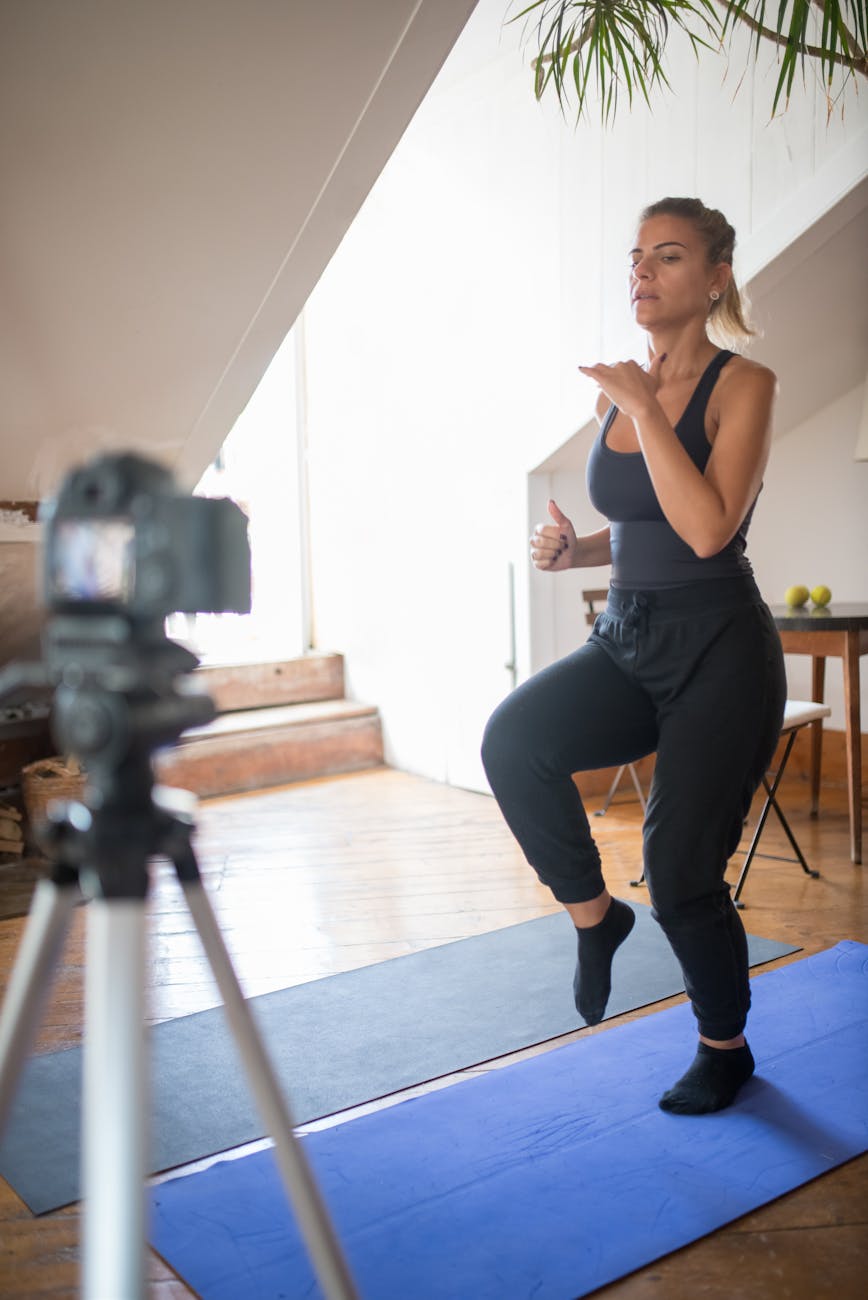
Instructor Led Online Personal Training
Cost – £55 per 50 minute workout.
£600 for a block of 12 sessions.
In recent years, the fitness landscape has transformed dramatically, with technology paving the way for innovative training solutions. One of the most notable advancements is instructor-led online personal training, a tailored and interactive approach that bridges the gap between traditional personal training and the convenience of remote workouts.
Here’s why this training style is becoming the go-to option for individuals seeking to enhance their fitness journey.
- Personalized Attention:
Instructor-led online personal training offers one-on-one sessions that cater to your unique goals, fitness level, and preferences. Trainers assess your capabilities and design customized workout programs that evolve with your progress, ensuring you receive the attention you need even in a virtual setting. - Flexibility and Convenience:
Gone are the days of commuting to the gym for a workout. With online personal training, you can schedule sessions that fit seamlessly into your hectic lifestyle. Whether you prefer an early morning session or a late-night workout, instructor-led training adapts to your timetable, allowing you to exercise wherever you feel most comfortable—be it at home, in a park, or while traveling. - Enhanced Accountability:
Having a dedicated instructor keeps you motivated and accountable. Regular check-ins and progress tracking through online platforms encourage consistency and help you stay committed to your fitness goals. Knowing that someone is there to support and guide you can lead to higher adherence rates than traditional solo workouts. - Access to Expert Knowledge:
Instructor-led training connects you to experienced fitness professionals, regardless of your geographic location. You gain access to their expertise, specialized knowledge in areas such as nutrition and injury prevention, and the ability to ask questions in real-time, facilitating a deeper understanding of your fitness journey. - Customizable Workouts:
Online personal trainers can easily modify workouts based on available equipment, space, and individual needs. With an array of virtual training tools, you can engage in various workouts tailored to your interests, whether it’s strength training, HIIT, yoga, or functional fitness. - Cost-Effective:
While personal training sessions can be a significant investment, instructor-led online personal training often comes at a lower cost. This affordability makes professional guidance accessible to a broader audience, helping to democratize fitness and wellness. - Community and Support:
Many online training platforms include community features, where clients can connect with each other for support and camaraderie. This sense of community enhances motivation and accountability, fostering a supportive environment that encourages participants to strive for their goals together.
In conclusion, instructor-led online personal training represents a modern approach to fitness that combines the expertise of personal trainers with the convenience of digital accessibility. Its benefits—personalized attention, flexibility, enhanced accountability, expert knowledge, customizable workouts, cost-effectiveness, and community support—make it a compelling choice for anyone looking to achieve their health and fitness goals. Whether you’re a fitness novice or a seasoned athlete, this innovative training method provides the tools and guidance needed to thrive on your fitness journey.
Self Led Online Personal Training (6 week Program)
Cost – £100
Maximize your fitness results without breaking the bank. Self-led personal training provides cost-effective access to structured workout plans and expert guidance. Perfect for those who prefer to train independently and have the self-discipline to stay on track.
6-Week Workout Program Overview
Program Structure
Duration: 6 Weeks
Frequency: 2-5 Workouts per Week (Tailored based on fitness level and experience)
Includes:
- 1x 30-Minute Coaching Call
- Weekly Updates and Reviews
- Goal Setting
- Lifestyle Assessment
- Tracking and Progress Monitoring
- Full Accountability
Weekly Breakdown
Week 1: Assessment & Goal Setting
- Initial Meeting: 30-minute coaching call to discuss current fitness level, goals, and lifestyle.
- Fitness Assessment: Evaluate current strength, endurance, flexibility, and mobility.
- Goal Setting: Establish SMART (Specific, Measurable, Achievable, Relevant, Time-bound) goals.
- Workout Structure:
- Beginner: Full-body workout (3x per week)
- Intermediate/Advanced: Upper/Lower split (4-5x per week)
Week 2: Building Foundations
- Focus: Establish a workout routine and enhance form.
- Workout Examples:
- Beginner: Circuit training focusing on bodyweight exercises (squats, push-ups, lunges, plank)
- Intermediate/Advanced: Compound lifts (squats, deadlifts, overhead press) and accessory work.
- Weekly Review: Assess adherence and adjust goals if necessary.
Week 3: Increasing Intensity
- Focus: Add challenging variations and increase workout intensity.
- Workout Examples:
- Beginner: Introduce light weights (resistance bands or dumbbells) for bodyweight exercises.
- Intermediate/Advanced: Introduce supersets and drop sets for strength training.
- Lifestyle Evaluation: Review nutrition, sleep, and recovery practices.
Week 4: Mid-Program Check-In
- 30-Minute Coaching Call: Discuss progress, challenges, and modifications needed.
- Tracking Progress: Check metrics like weight, reps, sets, and energy levels.
- Workout Adjustments: Tailor workouts based on feedback.
- Weekly Review: Analyze workout logs and progress.
Week 5: Pushing Limits
- Focus: Push through fitness plateaus.
- Workout Examples:
- Beginner: Increase reps/sets or decrease rest time between exercises.
- Intermediate/Advanced: Introduce HIIT (High-Intensity Interval Training) sessions (cardio mixed with strength).
- Accountability Check: Weekly accountability texts/emails to keep motivation high.
Week 6: Taper & Reflect
- Final Workouts: Focus on maintaining intensity while avoiding workout burnout.
- Final Assessment: Retest initial metrics and analyze improvements.
- Coaching Call: Discuss findings, celebrate achievements, and set future goals.
- Wrap-Up: Reflect on lifestyle changes and sustainable habits for continued success.
Tracking & Monitoring
- Weekly Check-In: Each week, track progress with logs for workouts, nutrition, and overall health.
- Feedback Loop: Encourage communication via text or email for ongoing support.
- Visual Progress: Use photos, measurements, or fitness tests to visualize the journey.
Conclusion
This 6-week workout program is designed for flexibility to accommodate various fitness levels. Ensure the program is tailored to individual needs while providing the structure necessary for achieving fitness goals. The key components such as accountability, tracking, an
To book a free 20 minute consultation, please fill out the form below.



 Aaron Brown Personal Training & Sports Massage Therapy